
What Is the Honor Roll? GPA Requirements Explained
What Is the Honor Roll? GPA Requirements and How to Make It
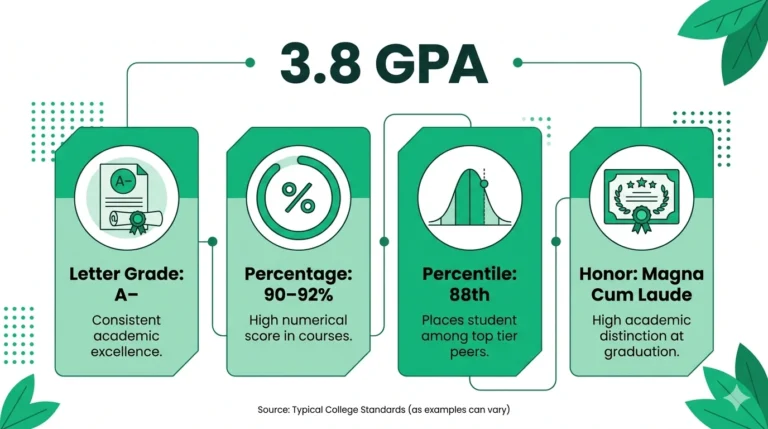
The honor roll is an academic recognition for students who earn a high GPA, usually 3.5 or above, during a single grading period at a middle or high school.
Schools publish the list each marking period to recognize their top students, and the honor often appears on the report card. Many schools use tiers, such as an A honor roll for straight-A students and an A/B honor roll for a slightly lower bar.
The detail that confuses students most is that the honor roll is not based on one universal GPA. Each school sets its own cutoff and rules, and some skip the GPA number entirely in favor of a letter-grade rule, like allowing no grade below a B.
| Quick Fact | Answer |
|---|---|
| What it is | A per-term academic honor for high grades |
| Typical GPA needed | 3.5 or higher (range 3.0 to 3.5) |
| School level | Mostly middle and high school |
| Common tiers | A honor roll, A/B honor roll, high honor roll |
| How often awarded | Each grading period or marking term |
| Where it shows | Report card, sometimes the transcript |
What Does Being on the Honor Roll Mean?
Being on the honor roll means you earned grades high enough to rank among your school’s top students for a grading period. It is a formal way for a school to recognize strong academic performance, usually published as a list each term.
The recognition is tied to one marking period at a time. You earn it for the quarter, trimester, or semester in which your grades meet the cutoff, and you can earn it again every term you qualify. A student who makes the honor roll all four quarters is recognized four separate times.
One point that gets lost: the honor roll is set by your individual school or district, not by a national standard. This is why a friend at another school may face a different GPA cutoff or a different set of tiers for the exact same honor. The label is the same; the rules behind it are local.
Honor Roll vs Dean’s List: What’s the Difference?
The honor roll is the high school and middle school version of the honor, while the Dean’s List is its college equivalent. Both reward a high GPA over a term, but they apply at different education levels.
Honor roll is the language schools use through twelfth grade. Once you reach college, the same idea takes the name Dean’s List, issued by the dean of your school or college. The structure is similar, but the college version carries more weight because it can sit on a college transcript that graduate schools and employers may review.
The practical difference is what each one counts toward later. Honor roll rarely matters after high school, while a Dean’s List standing has lasting value. If you are heading to college soon, our guide on what the Dean’s List is explains how the college version works and what it takes to earn it.
Does the Honor Roll Go on Your Report Card or Transcript?
The honor roll almost always appears on your report card for the grading period you earned it. Whether it also appears on your permanent transcript depends on the school, and many do include it.
On the report card, it usually shows as a note or label next to your grades for that term. This is the version students and parents see right away. Because report cards are issued every marking period, the honor roll is recorded each time you make it.
The transcript is a separate question. Some schools carry the honor onto the official transcript that colleges later see, while others keep it only on report cards and term announcements. If you want the recognition on your transcript for college applications, ask your school counselor whether your school records it there, rather than assuming it transfers automatically.
What GPA Do You Need for the Honor Roll?

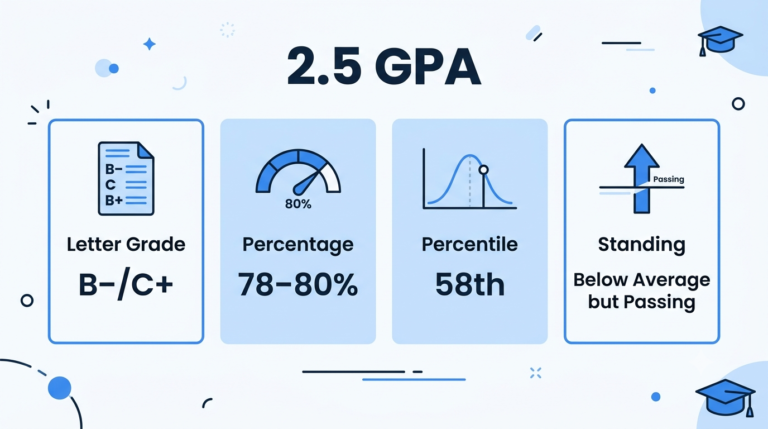
Most schools require a GPA of 3.5 or higher for the honor roll, though the cutoff ranges from about 3.0 to 3.5 depending on the school. Some schools set no GPA number at all and instead require all A’s and B’s with no grade below a set level.
The 3.5 figure is the most common single cutoff, which is why students hear it most. But treating it as universal leads to confusion when a friend at another school qualifies with a 3.2 or needs a 3.7. Your school’s published cutoff is the only one that decides your honor.
Knowing the exact number ahead of time helps you plan a term. If your school uses 3.5, you know what each class needs to contribute to your average. If it uses a letter-grade rule instead, a single C can disqualify you even when your GPA looks high enough, which the grades section below explains.
Why the Honor Roll GPA Is Usually 3.5 (But Varies by School)
The honor roll GPA is usually around 3.5 because that level marks consistent A and B work without being so high that few students qualify. It is selective enough to mean something, yet reachable for strong, steady performers.
Schools that move the line do so to fit their own grading. A school with a lower cutoff of 3.0 wants to recognize a broader group of solid students. A school with a higher bar, closer to 3.7, keeps the honor more exclusive. Neither is wrong; each reflects how that school chooses to define excellence.
Many schools also pair the GPA with a grade-floor rule. A common setup requires a 3.5 average and no grade below a C, or sometimes no grade below a B. Under these rules, the GPA alone is not enough, because one low grade can keep you off the list even if your average clears the cutoff.
Honor Roll GPA by Common Thresholds
This table shows the GPA cutoffs schools use most often across the common honor roll tiers. Check your school handbook to confirm which numbers and tier names apply to you.
| Honor Roll Tier | Typical GPA | What It Usually Requires |
|---|---|---|
| Regular / A-B honor roll | 3.0 to 3.49 | All A’s and B’s, no grade below a set level |
| Honor roll (standard) | 3.5 | Mostly A’s with a few B’s |
| High / distinguished honor roll | 3.7 to 3.99 | Nearly all A’s, often no grade below B |
| A honor roll / principal’s list | 4.0 | Straight A’s in every class |
Two reminders when reading any cutoff. First, honor roll is based on your grades for that one term, not your long-term cumulative average. Second, the GPA is often only half the requirement, with a grade-floor rule deciding the rest.
Types of Honor Roll Explained

Most schools offer two or more honor roll tiers, set by how high your grades are. The common tiers, from highest to lowest, are the A honor roll or principal’s list, the high or distinguished honor roll, and the A/B honor roll. Exact names and cutoffs vary by school.
The tiers exist so schools can recognize different levels of achievement rather than lumping every strong student together. A straight-A student and a student with mostly A’s and a couple of B’s both did well, and tiers let the school honor each at the right level.
A Honor Roll (Straight-A Honor Roll)
The A honor roll recognizes students who earned an A in every class for the grading period. It is the top standard honor roll tier at most schools, requiring a 4.0 average with no grade below an A.
Because it demands straight A’s, it is the hardest tier to reach and the smallest group at most schools. A single B drops you out of the A honor roll and into the next tier down, usually the A/B honor roll. At some schools this exact tier is called the principal’s list or principal’s honor roll instead, which the section below covers.
A/B Honor Roll
The A/B honor roll recognizes students whose grades are all A’s and B’s, with no grade lower than a B. It usually corresponds to a GPA of about 3.0 to 3.49 and is the most attainable honor roll tier.
This is the tier most students aim for first, because it does not require perfection. You can earn a B in a tough class and still qualify, as long as no grade slips to a C or below. The one rule that trips students up: a single C, even with several A’s, breaks the all-A-and-B requirement and keeps you off the A/B honor roll, regardless of your average.
High Honor Roll and Distinguished Honor Roll
The high honor roll, sometimes called the distinguished honor roll, sits between the standard honor roll and straight A’s. It typically requires a GPA around 3.7 to 3.99, with most grades being A’s and no grade below a B.
Names vary widely here, which is the main source of confusion. One school’s high honor roll is another school’s distinguished honors or first honors. The level is the same idea: better than the regular honor roll but short of a perfect 4.0. If your school uses several honor names, the handbook will list the exact GPA each one requires, since you cannot tell the order from the names alone.
Principal’s List vs Honor Roll
The principal’s list is usually the highest honor a school awards, set above the regular honor roll. At most schools it requires straight A’s or a 4.0, making it equal to or higher than the A honor roll.
The difference between the principal’s list and the standard honor roll comes down to the bar. The honor roll often accepts A’s and B’s, while the principal’s list demands all A’s. Some schools use both names as separate tiers, with the principal’s list on top. Others use principal’s list as their single highest recognition and honor roll for everyone else who qualifies. Either way, the principal’s list signals the strongest grades in the school for that term.
What Grades Do You Need for the Honor Roll?
For most honor rolls you need all A’s and B’s, with no grade falling below a set minimum, usually a C or a B depending on the tier. This grade-floor rule works alongside the GPA requirement, not instead of it.
This is where many students get caught off guard. They focus on their average and forget that one low grade can disqualify them on its own. A student with four A’s and one D may have a strong GPA, but the D breaks the grade-floor rule, so the honor roll is out for that term.
How the rule is written varies by tier and school:
- A/B honor roll: typically no grade below a B. A single C ends eligibility, even with the rest A’s.
- High or distinguished honor roll: often no grade below a B, plus a higher GPA than the standard tier.
- A honor roll or principal’s list: every grade must be an A. No exceptions.
The takeaway is to protect your weakest class, not just your average. Pulling one borderline grade up to meet the floor often matters more for the honor roll than adding another A on top of grades that already qualify.
How Do You Get on the Honor Roll?

To get on the honor roll, earn grades that meet your school’s GPA cutoff, usually 3.5, while keeping every grade above the required floor for that term. There is no application; the school identifies qualifying students automatically once grades are final.
Since the honor is automatic, the whole task is hitting the grade targets during the marking period. A few habits make the difference between just missing and clearing the line:
- Guard your lowest grade. The honor roll is often lost to one weak class, not a low average, so the grade closest to the floor deserves the most attention.
- Track your average mid-term. Knowing where you stand before grades close lets you act while there is still time, rather than hoping it works out.
- Finish strong on graded work. Tests and major projects move a term grade the most, so a strong finish on those can lift a borderline class over the line.
If a class is sitting below the cutoff, focused effort there pays off fastest. Our guide on how to raise your GPA covers the specific tactics that move a term average quickly, which is exactly what the honor roll rewards.
Why Some Students Miss the Honor Roll Despite Good Grades
Students with strong grades still miss the honor roll when they break a rule beyond the GPA, such as earning one grade below the floor, having an incomplete, or falling short on a conduct requirement. A high average alone does not guarantee the honor.
The most common reasons a good student gets left off:
- One grade below the floor. A single C on an A/B honor roll, or a single B on an A honor roll, ends eligibility no matter how high the average is.
- An incomplete grade. Many schools will not place a student on the honor roll for any term that has an incomplete on record until the grade is finalized.
- Conduct or citizenship marks. Some schools, especially at the middle school level, disqualify students with poor conduct or effort marks, even with strong academic grades.
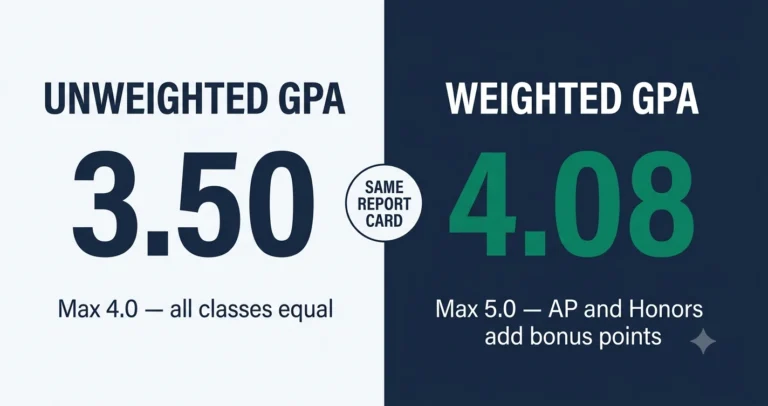
- Weighted vs unweighted counting. If a school uses unweighted grades, a B in an honors class counts the same as a B in a regular class, which can surprise students who expected the harder course to help more.
- Pass/fail or non-graded courses. Classes without a letter grade may not count, and at some schools they can leave a student short of the required number of graded courses.
Most online explanations list the GPA and stop, which leaves students confused when strong grades still miss the list. The fix is to read your school’s full honor roll policy, including the grade floor and any conduct rules, not just the GPA number.
Does the Honor Roll Matter for College?
The honor roll matters modestly for college. It shows consistent academic effort, but admissions officers focus far more on your GPA, course rigor, and transcript than on honor roll labels, which vary too much between schools to compare directly.
On the value side, the honor roll is not meaningless. Repeated honor roll standing signals steady performance over time, and it can support a strong application as one detail among many. For students building extracurricular and academic profiles, it adds to the overall picture of a dedicated student.
The limits matter just as much. Because every school defines the honor roll differently, a college cannot read a fixed meaning into it the way it can read a GPA. Admissions officers already see your actual grades on the transcript, which tell them more than the label does. This is why honor roll works best as a supporting detail, not a headline achievement.
There is one situation where it does extra work. A student whose grades improved over time can point to honor roll standing in later terms as proof of an upward trend, telling a growth story that a single GPA number can hide. In that case the recognition is more useful than its modest reputation suggests.
Honor Roll vs Other Academic Honors

The honor roll is one of several academic honors, and they are easy to mix up. The honor roll and principal’s list are term-based school honors, the Dean’s List is the college version, and the National Honor Society is a membership organization with its own requirements.
The clearest way to tell them apart is to ask who awards each one and what it takes. The honor roll and principal’s list come from your school each marking period, based on grades alone. The Dean’s List is the same idea at the college level. The National Honor Society is different in kind: it is a club you apply to or are invited into, judged on GPA plus service, leadership, and character, not grades by themselves.
Quick Comparison Table
This table makes the differences easy to see at a glance.
| Honor | Level | Based On | How It Works |
|---|---|---|---|
| Honor Roll | Middle / high school | Term grades | Automatic each marking period |
| Principal’s List | Middle / high school | Term grades (often 4.0) | Top tier of the honor roll |
| Dean’s List | College | Term GPA | Automatic each semester |
| National Honor Society | High school | GPA + service + leadership | Application or invitation |
In short, the honor roll, principal’s list, and Dean’s List reward grades for a single term, while the National Honor Society rewards a fuller profile that goes beyond the report card. A student can make the honor roll every term and still need a separate application to join the National Honor Society.
Frequently Asked Questions
-
Honor roll is usually a GPA of 3.5 or higher, though the cutoff ranges from about 3.0 to 3.5 by school. Many schools also require that no grade falls below a set level, so the GPA is often only part of the requirement.
-
Most honor rolls require all A’s and B’s with no grade below a B or a C, depending on the tier. The A honor roll or principal’s list requires straight A’s. A single grade below the floor can disqualify you even with a high average.
-
High honor roll requires a higher GPA than the regular honor roll, typically around 3.7 to 3.99 versus about 3.5. High honor roll usually means nearly all A’s, while the standard honor roll allows more B’s. Exact cutoffs vary by school.
-
The A/B honor roll recognizes students whose grades are all A’s and B’s, with no grade below a B. It usually corresponds to a GPA of about 3.0 to 3.49 and is the most attainable honor roll tier.
-
It depends on the school. Many honor rolls use unweighted grades, so an A counts the same in a regular and an honors class. Schools that weight grades give bonus value to harder courses. Check your school’s policy to know which applies.
-
Yes. Most honor rolls have a grade floor, so a single grade below the required level can disqualify you even with a high average. On an A/B honor roll, one C is often enough to end eligibility for that term.
-
No. The honor roll is the middle and high school recognition, while the Dean’s List is the college version. They reward similar achievement at different levels, and the Dean’s List carries more weight for future applications.
-
It helps modestly. Honor roll shows consistent effort, but colleges focus more on your GPA and transcript, which they can read directly. List it as a supporting detail, especially if repeated standing shows an upward trend in your grades.
Check If You’ll Make the Honor Roll
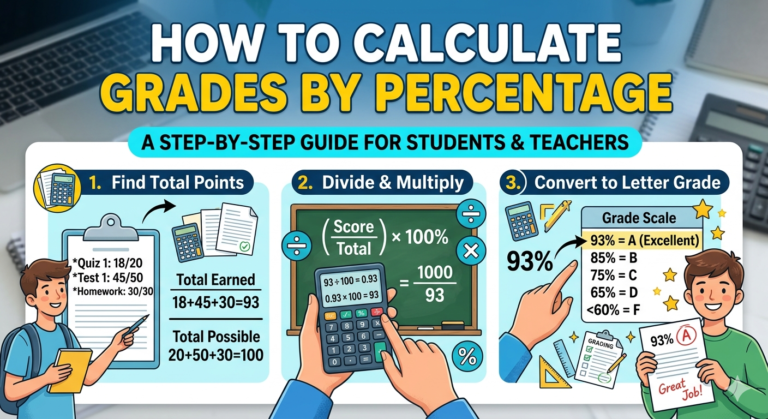
Knowing your school’s cutoff only helps if you also know your own GPA for the term. Waiting for the report card leaves you guessing all marking period, when a quick calculation would show you exactly where you stand.
Run your current grades through the free GPA calculator at TheEasyGrader. Enter each class, its grade, and its credit value to see your term GPA in seconds, then compare it to your school’s honor roll requirement. If you are close, you will know which class to focus on while there is still time to make the list.